Your Amazing Feet, and How Barefoot Time Outside Nourishes Them
The Many Functions of Feet
Your feet are sensory organs. Thousands of nerve endings detect pressure, texture, and position, sending constant feedback to the brain. Balance and coordination depend on them. The feet adjust instantly to uneven ground and sudden shifts, often before conscious thought.
The feet also influence posture. Just as the foundation of a house affects everything built above it, alignment at the ground affects the entire body. Small changes in the feet can echo upward, influencing movement patterns over time.
Feet respond to use. Movement and habit shape their structure, and structure influences function. The feet aren’t just for walking — they are the body’s interface with the ground, where force meets feedback and movement begins. Stability starts from the ground up.
In Chinese Medicine, six of the twelve primary meridians — which correspond to organ health — begin or end in the feet. Healthy feet are not only the basis of posture and movement, but an important part of overall health.
The Spring in Your Step
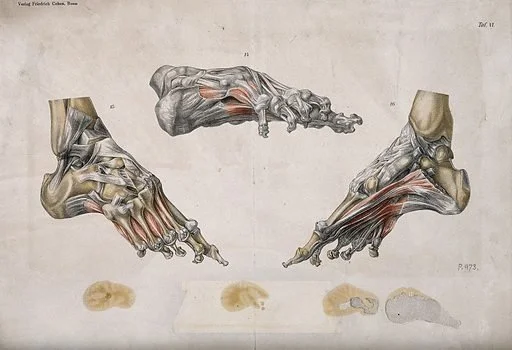
Did you know that over half of the bones in the body are found in the hands and feet? Each foot contains 26 bones and dozens of joints, each designed for movement.
When we walk, our arches compress and release, absorbing force from the ground and redistributing it with each stride. This “spring in our step” helps protect the knees, hips, and spine.
Think of the suspension system in a car: without springs and shock absorbers, every bump transfers directly into the frame. Healthy feet function similarly. They flex under tension, store energy, and release it efficiently into the next step.
Why “Motion is Lotion” for Feet
In tai chi class, we always begin by rotating the joints of the whole body, starting with the ankles.
Movement keeps joints healthy by increasing synovial fluid, which reduces friction and nourishes cartilage with nutrients and oxygen. It also helps clear waste and reduce inflammation.
Regular activity also strengthens the over 100 muscles and ligaments in each foot, which provide structural support and flexibility. Movement is the key to not only mobilizing the joints, but also for creating healthy and supportive surrounding tissue. The collective coordination of all the parts helps us with balance, adaptability, and ease of movement.
Use It or Lose It — The Sole Dilemma
Imagine wearing a pair of oven mitts for an hour. You’d likely find it challenging to do basic tasks like opening a door or cracking an egg, let alone type or play the piano! Over time, your hands would start to lose the fine motor skills, and the many muscles of your hand would weaken.
Modern shoes can create a similar experience for the feet.
Much of our world is paved, and shoes provide additional shock absorption against unnaturally hard surfaces. However, shoes create the same experience for our feet with every step, reducing the variety of movement and sensory input our feet evolved with. Walking indoors is similarly unvaried. Predictable, but under-stimulating.
Uneven ground naturally creates countless micro-adjustments in the feet and ankles, engaging our muscles, joints, and balance systems with every step, ultimately making our feet healthier and more resilient. Without that variability, our ability to adapt diminishes. Our feet become one-trick ponies.
Over time, this can contribute to balance problems and may play a role in issues that travel upward through the body: foot pain, tight calves, knee strain, hip tension, low back discomfort, restless legs, neuropathy, and more.
Getting Started: Lose the Shoes
You don’t have to throw away every pair of shoes you own. If you’re ready to start improving your balance, posture, and flexibility from the ground up, it’s as easy as going outside!
Find a grassy place where you can take your shoes off, whether it’s your backyard or the park, and move! Throw a ball with your dog, garden, do some tai chi or yoga. Or try taking a ten-minute walk.
Expect to move at a slower pace, and that your feet might be sensitive at first. Your soles will get accustomed to it in a few weeks. Even just a few minutes a couple times a week will help. You might find that as you go barefoot more, you naturally want more of it! The warm seasons are great times to start finding small ways to lose the shoes.
Simply walking barefoot on the earth gives the feet all the stimulation they need to stay strong, responsive, and adaptive. Whether you’re four or eighty-four, touching grass underfoot will make your feet — and the rest of your body connected to them — healthier.
Stay tuned for future articles on grounding, and on what barefoot shoes do — and don’t do — for healthy feet (hint: rubber sole = no grounding).
